Learning Experience 1.4
Explore the following three activities with your R-2 team. Ask your staff to suggest what types of rational number ideas are being developed and the range of strategies or difficulties children may exhibit in your chosen activity. Consider what materials and representations you might employ and how you may adapt, modify and extend the tasks to cater for a wide range of learners. Identify what year level and curriculum standard your task aligns with. Some suggestions have been provided for you to help support your staff.
Activity 1:
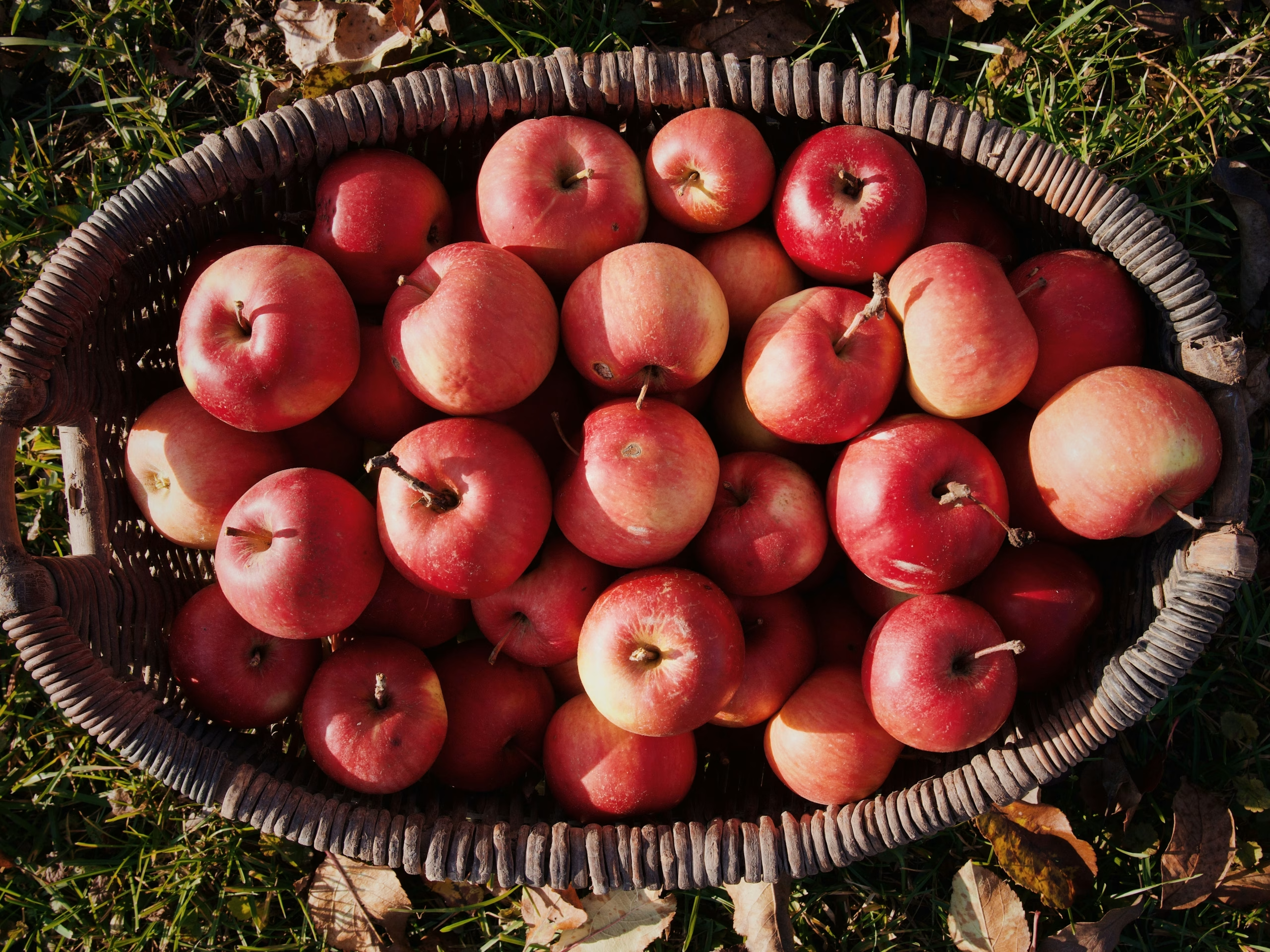
Penny and Lisa have picked 30 apples from their apple tree. Penny has one basket and puts half of the apples into hers. Lisa has two baskets, and she splits the remaining apples equally between her baskets. How many apples are in each basket? Who carried more apples?
Rational Number ideas that are possible across R-2:
- Halving and doubling
- Many as one (x number of apples is half of the total collection)
- Times as many – Lisa has twice as many baskets, but
- 1nth of… half of the apples picked are carried by both Lisa and Penny. One fourth of the picked apples are carried in each of Lisa’s baskets, which is x number of apples
Australian Curriculum Connections:
| Foundation | Year 1 | Year 2 |
|---|---|---|
| AC9MFN03 – Quantify and compare collections to at least 20 using counting and explain or demonstrate reasoning | AC9M1N02 – Partition one- and two-digit numbers in different ways using physical and virtual materials, including partitioning two-digit numbers into tens and ones | AC9M2N02 – Partition, rearrange, regroup and rename two- and three-digit numbers using standard and non-standard groupings; recognise the role of a zero digit in place value notation |
| AC9MFN04 – Partition and combine collections up to 10 using part-part-whole relationships and subitising to recognise and name the parts | AC9M1N03 – Quantify sets of objects, to at least 120, by partitioning collections into equal groups using number knowledge and skip counting | AC9M2N03 – Recognise and describe one-half as one of 2 equal parts of a whole and connect halves, quarters and eighths through repeated halving |
| AC9MFN06 – Represent practical situations that involve equal sharing and grouping with physical and virtual materials and use counting or subitising strategies | AC9M1N06 – Use mathematical modelling to solve practical problems involving equal sharing and grouping; represent the situations with diagrams, physical and virtual materials, and use calculation strategies to solve the problem | AC9M2N05 – Multiply and divide by one-digit numbers using repeated addition, equal grouping, arrays, and partitioning to support a variety of calculation strategies |
Activity 2:
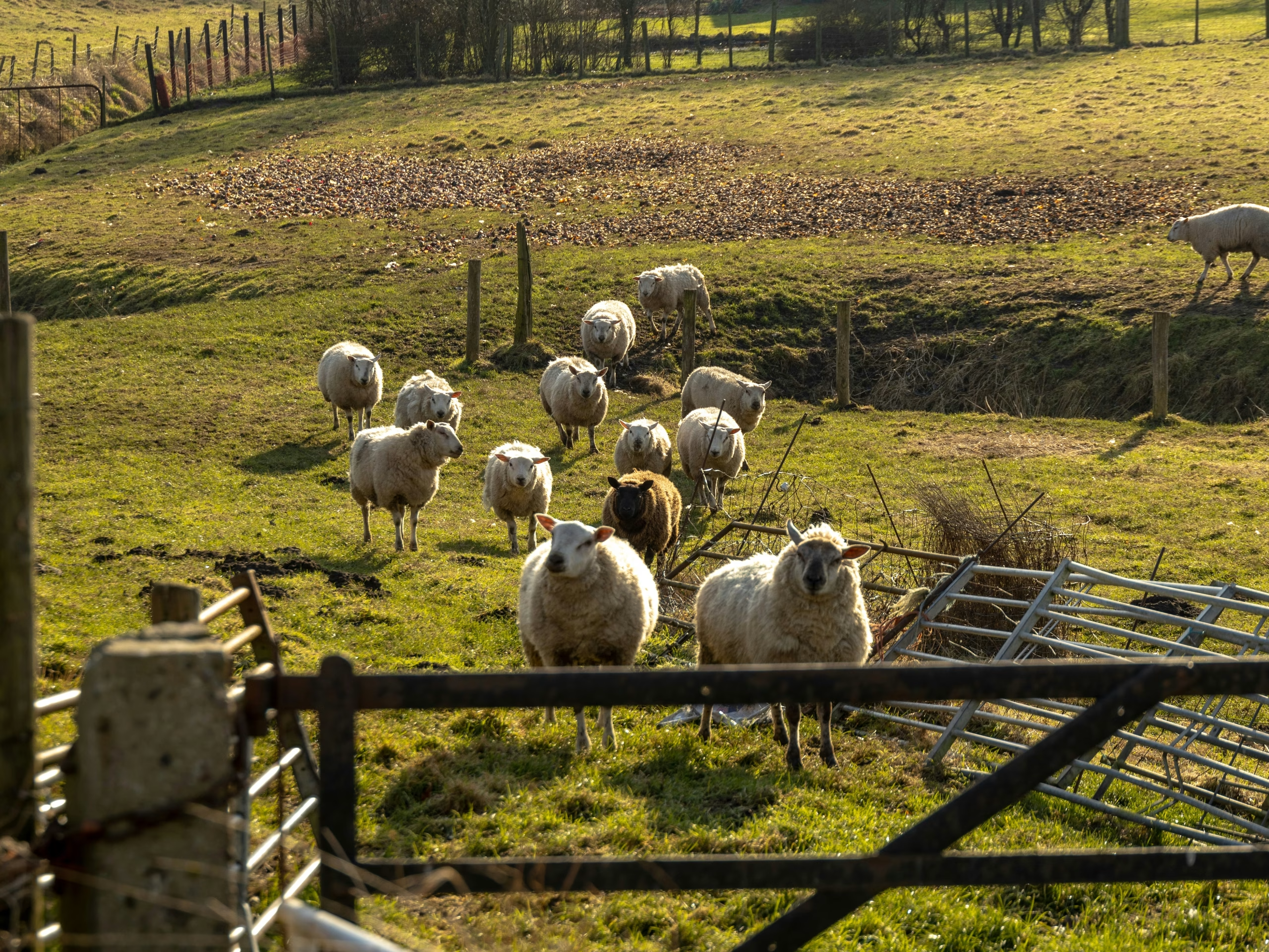
Farmer Bill has x number of sheep on his farm (choose a quantity). He has two paddocks that the sheep can roam between. Today Bill checks on his sheep and sees all ten sheep in one paddock, and no sheep in the other. How many ways could the sheep be separated between the two paddocks? What if there were three paddocks? How many combinations are possible?
Rational Number ideas that are possible across R-2
- Partitioning
- Part-part-whole number knowledge
- Addition and subtraction
- Order irrelevance principle
Australian Curriculum Connections:
| Foundation | Year 1 | Year 2 | Year 2 |
|---|---|---|---|
| Number | Number | Number | Algebra |
| AC9MFN03 – Quantify and compare collections to at least 20 using counting and explain or demonstrate reasoning | AC9M1N05 – Use mathematical modelling to solve practical problems involving additive situations, including simple money transactions; represent the situations with diagrams, physical and virtual materials, and use calculation strategies to solve the problem | AC9M2N02 – Partition, rearrange, regroup and rename two- and three-digit numbers using standard and non-standard groupings; recognise the role of a zero digit in place value notation | AC9M2A02 – Recall and demonstrate proficiency with addition facts to 20; extend and apply facts to develop related subtraction facts |
| AC9MFN04 – Partition and combine collections up to 10 using part-part-whole relationships and subitising to recognise and name the parts | AC9M1N04 – Add and subtract numbers within 20, using physical and virtual materials, part-part-whole knowledge to 10 and a variety of calculation strategies | AC9M2N06 – Use mathematical modelling to solve practical problems involving additive and multiplicative situations, including money transactions; represent situations and choose calculation strategies; interpret and communicate solutions in terms of the situation | |
| AC9M1N05 – Use mathematical modelling to solve practical problems involving additive situations, including simple money transactions; represent the situations with diagrams, physical and virtual materials, and use calculation strategies to solve the problem | AC9M1N05 – Use mathematical modelling to solve practical problems involving additive situations including simple money transactions; represent the situations with diagrams, physical and virtual materials, and use calculation strategies to solve the problem |
Activity 3:
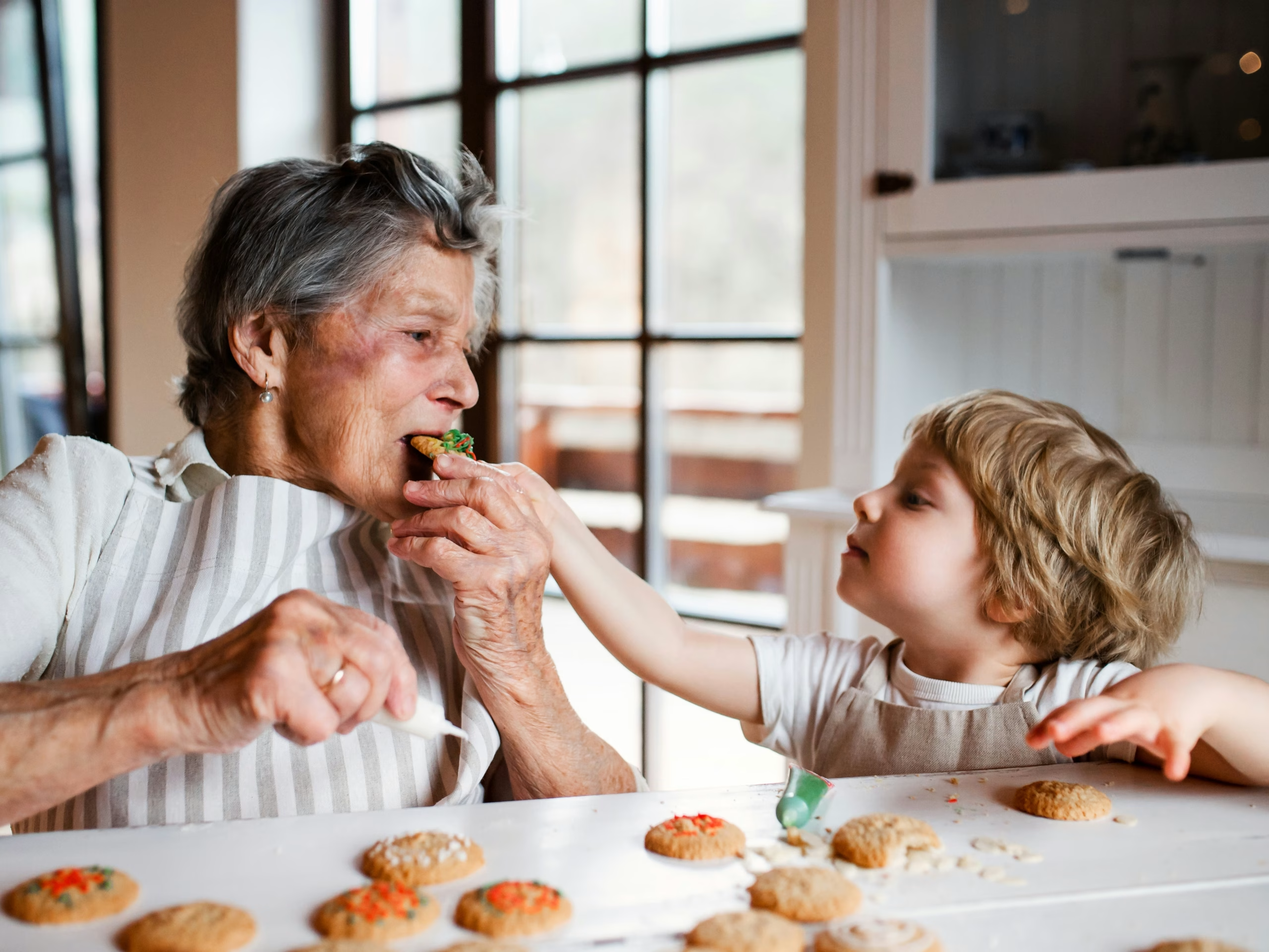
Grandad made a batch of twelve cookies to share between his eight grandchildren. How much is each person going to get if the whole twelve cookies are shared fairly between the eight grandchildren?
Australian Curriculum Connections:
| Foundation | Year 1 | Year 2 | Year 2 |
|---|---|---|---|
| Number | Number | Number | Measurement |
| AC9MFN06 – Represent practical situations that involve equal sharing and grouping with physical and virtual materials and use counting or subitising strategies | AC9M1N06 – Use mathematical modelling to solve practical problems involving equal sharing and grouping; represent the situations with diagrams, physical and virtual materials, and use calculation strategies to solve the problem | AC9M2N05 – Multiply and divide by one-digit numbers using repeated addition, equal grouping, arrays, and partitioning to support a variety of calculation strategies | AC9M2M02 – Identify common uses and represent halves, quarters and eighths in relation to shapes, objects and events |
Tip! If you click on the “elaborations” and “resources” links for each of the content descriptors within the Australian Curriculum website, you will also find a range of other ways to explore these rational number ideas and some work sample/ task ideas too.